Table of Contents
-
What Is Effective Communication and Why Is It Vital in Marital Relationships?
-
Common Obstacles to Effective Communication in Marital Relationships
-
The Impact of Immigration on Marital Communication
-
Practical Strategies for Improving Effective Communication
-
When Do We Need Professional Help?
-
Conclusion
1. What Is Effective Communication and Why Is It Vital in Marital Relationships?
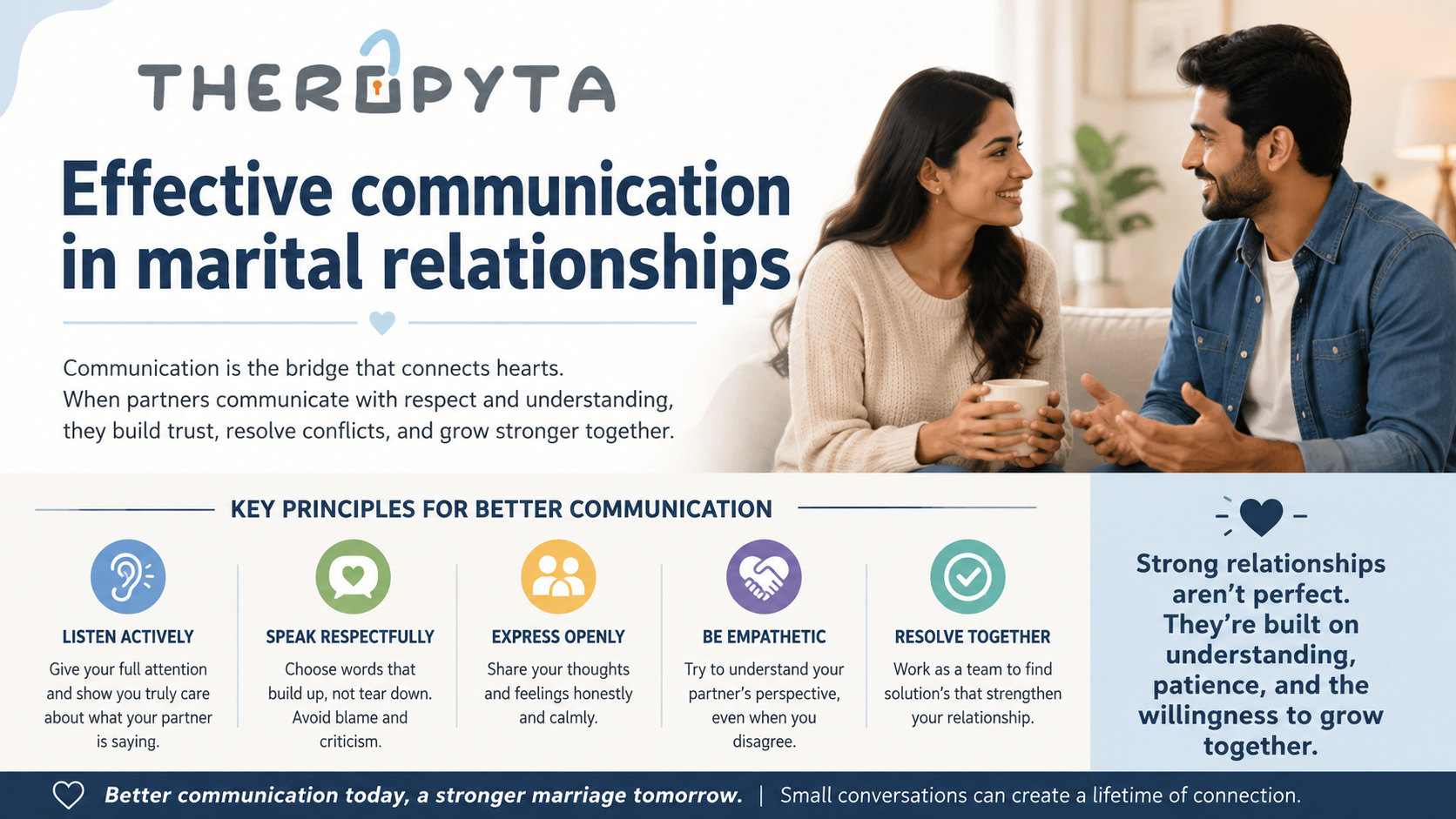
Effective communication goes far beyond the exchange of words and information. At its core, effective communication means the ability to convey messages, emotions, needs, and desires in a way that the other person correctly understands and can provide an appropriate response. This type of communication encompasses not only words and sentences but also tone of voice, body language, facial expressions, and even meaningful silences. In a marital relationship, effective communication is the bridge that connects two individuals and provides a foundation for intimacy, trust, and mutual understanding.
But why is this type of communication so vital? The answer can be found in this simple fact: most marital problems, whether small or large, stem from misunderstandings and unhealthy communication patterns. Couples who cannot properly express their feelings, articulate their needs clearly, or listen to each other gradually grow apart. Small misunderstandings, if not resolved in time and properly, turn into mountains of resentment and dissatisfaction that are no longer easily resolved. On the other hand, couples who possess effective communication skills can manage their conflicts constructively, prevent many tensions, and find appropriate solutions through cooperation and mutual understanding during crises. In fact, the quality of communication in a marital relationship is the most predictive factor for marital stability and satisfaction, and it is far more important than factors such as education level, income, or cultural similarities.
2. Common Obstacles to Effective Communication in Marital Relationships
The communication pathway between couples, though smooth and clear at the beginning of married life, may gradually encounter obstacles over time and with the accumulation of daily experiences that disrupt the flow of intimate and open dialogue. Recognizing these obstacles is the first step toward removing them. One of the most important and common obstacles is the lack of active listening. Many of us, during conversation, are busy formulating responses or judgments in our minds rather than truly listening to the other person. This type of listening, often called "listening to respond," causes us to miss the emotional and subtle messages of our partner, resulting in inappropriate or irrelevant responses. Active listening, in contrast, requires full attention to the other person's words, feelings, and body language, with the goal of deeply understanding the message being sent, not merely preparing a response.
Criticism and blame are another obstacle that quickly raises defensive walls in a relationship. When couples attack each other's character instead of expressing their needs and feelings, using phrases like "you always," "you never," or "it's your fault," not only does the problem remain unsolved, but the other person feels attacked and, instead of cooperating, thinks about defending themselves or retaliating. This pattern is one of the most destructive communication patterns, gradually eroding intimacy and increasing emotional distance.
Emotional withdrawal and punitive silence are also common obstacles. When one partner responds to conflict with silence, avoidance, or emotional retreat, this behavior can be distressing and frustrating for the other person. This silence is often perceived as indifference or rejection and can deepen emotional wounds. Conversely, verbal aggression and yelling also block communication and create an atmosphere of fear and tension in which neither partner feels safe expressing their true feelings.
Additionally, differences in communication styles can be a serious obstacle. Some people prefer to address issues immediately and face-to-face, while others need time to gather their thoughts before discussing a topic. Some speak with great detail, while others are brief and to the point. If these differences are not managed with awareness and mutual respect, they can lead to frequent misunderstandings and feelings of being overlooked.
3. The Impact of Immigration on Marital Communication
For immigrant couples, communication challenges take on new and more complex dimensions. Immigration is not merely a geographical change but a profound transformation in all aspects of individual and marital life, and the resulting psychological, social, and economic pressures can significantly affect the quality of communication between partners. One of the most significant of these effects is increased stress levels. Stress from worrying about family in Iran, economic challenges, language barriers, and pressure to adapt to a new environment can reduce couples' patience and tolerance, leading them to react impulsively and thoughtlessly. In such circumstances, the smallest disagreement can escalate into a major crisis, as the psychological capacity of both partners to tolerate tension has diminished.
Changes in traditional gender roles are another common challenge in immigration. In many cases, immigrant couples face fundamental changes in their roles. A spouse who was employed in Iran and served as the primary breadwinner may not be able to find suitable employment in the new country, and this change can lead to identity crisis and reduced self-esteem. Conversely, a spouse who primarily managed the household in Iran may be compelled to enter the workforce. These changes can create serious tensions around expectations, responsibilities, and the redefinition of roles, and if not properly discussed, can become an ongoing source of conflict.
Unequal acculturation is also a major challenge for immigrant couples. Sometimes one partner adapts to the new culture more quickly than the other, learns the language better, and establishes a new social network. This difference in adaptation speed can lead to feelings of distance and lack of mutual understanding. The partner who adapts more quickly may feel the other is falling behind or being resistant, while the slower-adapting partner may feel pressured and judged. Additionally, the economic pressure and job insecurity that many immigrant couples face can turn financial tensions into the central focus of arguments and affect the atmosphere of the home. Alongside these, separation from the family and friends support network—which in Iranian culture plays a very important role in reducing marital tensions—leaves couples alone in managing their conflicts and pushes them toward unhealthy communication patterns. Despite all these challenges, immigration can also be an opportunity for growth and relationship redefinition, provided that couples consciously and actively work on improving their communication.
4. Practical Strategies for Improving Effective Communication
Effective communication is a skill—a skill that can be learned and improved with awareness, practice, and consistency. Below are the most effective scientific and practical strategies for improving the quality of communication in marital relationships:
1. Active Listening
Active listening goes beyond hearing words. This skill involves giving full attention to your partner, understanding verbal and nonverbal messages, and demonstrating empathy and understanding. To practice active listening, when your partner is speaking, direct all your attention to them. Avoid judgment and premature responding. Use nonverbal cues such as eye contact, nodding, and facial expressions to show you are paying attention. After they finish speaking, briefly summarize what you heard to ensure you correctly understood the message. For example, say: "It sounds like you're upset about this because you feel your voice isn't being heard. Did I understand correctly?" This shows your partner you understand them and prevents future misunderstandings.
2. Using "I" Statements Instead of "You" Statements
One of the most effective techniques for reducing defensiveness in marital communication is using "I" statements. Instead of accusing your partner with "you" statements (e.g., "You never listen to me"), use "I" statements to express your feelings and needs without blame. For example, say: "When I speak and feel that I don't have your full attention, I feel sad and frustrated. I need to feel that what I'm saying matters to you when I bring up important issues." This way of expression allows for more constructive dialogue because the other person doesn't feel attacked and is more willing to listen and cooperate instead of defending themselves. Even a simple statement like "I'm worried" or "I need support" can be an effective alternative to "You don't understand me" or "You always do this."
3. Expressing Appreciation and Focusing on Positives
In marital relationships, over time and with the accumulation of daily challenges, couples may focus more on each other's weaknesses and mistakes, overlooking positive aspects and small efforts. This neglect of positives, even if unconscious, can negatively affect communication quality and create a foundation for feeling overlooked. Expressing appreciation, even for small, everyday things, can have a remarkable effect on relationship quality. Each day, identify at least one or two positive things your partner does and thank them clearly. For example: "Thank you for making dinner today" or "I really appreciated that you thought of me and did this for me." This not only makes the relationship atmosphere more positive but also encourages couples to continue positive behaviors, gradually establishing a culture of appreciation in the relationship.
4. Dedicated Time for Dialogue
In the busyness of daily life, many couples don't find enough time for deep, intimate conversations. Daily conversations often focus on practical matters like planning, household tasks, or financial issues, leaving no room for exchanging feelings and emotional needs. It's beneficial to regularly set aside time for deep, uninterrupted dialogue. This could be fifteen minutes at the end of the day or an hour on the weekend. The important thing is that this time is free from distractions (like television, phones, or housework) and that both partners have the opportunity to speak calmly about their feelings, concerns, dreams, and needs. Over time, these deep conversations strengthen the emotional bond between couples and prevent the accumulation of misunderstandings.
5. Managing Conflict Constructively
Conflict is inevitable in any relationship and can be an opportunity for growth and mutual understanding, provided it's managed constructively. For constructive conflict management, when you feel the discussion is heating up and emotions are running high, it's better to pause and take time to calm down. You can suggest: "Let's take a ten-minute break and continue more calmly." This pause prevents the discussion from turning into a destructive argument. Afterward, with respect for your partner's perspective, try to see the issue from their point of view and focus on solutions rather than blame. Instead of letting grievances accumulate, it's better to raise concerns early, calmly and clearly, to prevent them from growing.
6. Paying Attention to Body Language
Communication is not limited to words, and body language plays a crucial role in conveying messages. Facial expressions, tone of voice, posture, and eye contact all form part of our message. When speaking with your partner, pay attention to both your own and your partner's body language. Is your facial expression open and welcoming or tense? Is your tone warm and affectionate or cold and detached? Are you making eye contact or avoiding it? Sometimes a simple hug or holding your partner's hand conveys more love and support than an hour of conversation. Awareness of body language and efforts to align verbal and nonverbal messages help make communication clearer and more effective.
7. Seeking Professional Counseling
If, despite repeated efforts, you remain stuck in unhealthy communication patterns and your conflicts recur repeatedly without progress, consulting a counselor or therapist can be very helpful. Marital and family counseling provides a safe, neutral space where couples, with the help of a professional, can understand the roots of their conflicts, identify and correct unhealthy communication patterns, and learn new skills for effective communication. Online counseling platforms like therapyta provide specialized psychological services online with experienced Persian-speaking counselors, making it possible for Iranian couples abroad to access psychological support from anywhere at any time. All counselors active on therapyta hold official licenses from the Psychological System Organization, and their credentials are thoroughly verified before collaboration, ensuring users can benefit from their expertise with complete confidence.
5. When Do We Need Professional Help?
All couples sometimes face challenges in their communication, but some signs indicate that it's time to seek help from a professional. If unhealthy communication patterns such as frequent criticism, contempt, defensiveness, or emotional withdrawal are persistently present in your relationship and haven't improved despite your own efforts, this is a sign that you need professional help. Also, if your conflicts recur frequently without resolution and each time end in the same argument, or if the emotional distance between you and your partner has increased to the point where you feel like roommates rather than a couple, it's time to see a counselor.
In cases of infidelity, verbal or physical abuse, or mental health disorders like depression or severe anxiety in one partner that are affecting the relationship, you must see a specialist. Also, if one of you is seriously considering separation but doesn't want to give up on the relationship yet, counseling can help clarify decision-making. Marital counseling is never too late and can help rebuild the relationship and restore intimacy even in the most critical circumstances. Remember that seeking help is not only not a sign of weakness but a sign of commitment to the relationship and a desire to improve it.
6. Conclusion
Effective communication is one of the most important and simultaneously most complex aspects of a successful marital relationship. This skill is the bridge that connects two individuals and provides a foundation for intimacy, trust, and mutual understanding. However, unhealthy communication patterns, over time and under the influence of life's pressures—especially for immigrant couples—can lead to misunderstanding, emotional distance, and decreased marital satisfaction. Fortunately, effective communication is a skill that can be learned and improved. With active listening, using "I" statements, expressing appreciation, dedicating time for deep dialogue, constructive conflict management, and paying attention to body language, communication quality can be dramatically enhanced, creating a more intimate and stable relationship. And when self-help strategies are insufficient, consulting a counselor or therapist can play a vital role in rebuilding and strengthening the relationship. Remember that every step you take toward improving communication with your partner is an investment in a happier, more satisfying future.


 (1).jpg)
 (Website) (3).jpg)